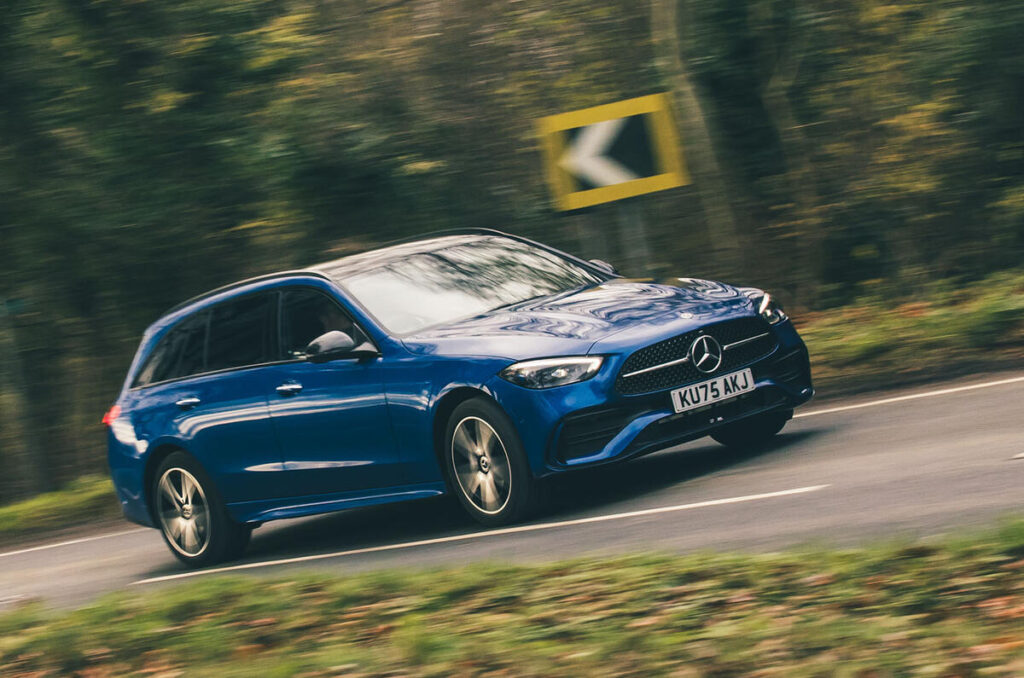
Mercedes Benz C Class : The W206-generation Mercedes C-Class marks a key transitional phase for the brand. Introduced in 2021, it became the first C-Class to drop multi-cylinder engines, offering only four-cylinder units with mild-hybrid or plug-in hybrid technology. At the same time, it remains one of Mercedes’ last combustion-based models before the full shift towards EV architectures.
Despite this, the C-Class continues to be hugely important—especially for European fleet buyers—thanks to its refined plug-in hybrids, traditional petrol/diesel options, and AMG performance variants.
Mercedes Benz C Class -Verdict: 8/10
A polished, tech-forward luxury sedan that prioritises refinement and efficiency over outright sportiness.
✔ Good
- PHEV delivers 50+ miles real-world EV range
- Smooth, strong performance across the range
- Excellent ride comfort and long-distance refinement
✘ Bad
- Boot space compromised in PHEVs
- Cabin quality has a few weak points
- Not as sporty or engaging as a BMW 3 Series
Mercedes Benz C Class – DESIGN & STYLING – 8/10
✔ Pros
- Smart packaging in PHEV variants
- Wide choice of engines and drivetrain options
✘ Cons
- Heavy kerb weight, especially in hybrids
The fifth-generation C-Class uses Mercedes’ Modular Rear Architecture II, making it slightly bigger than its predecessor but keeping the traditional layout of a longitudinal engine and rear-wheel drive (4Matic available only on AMG models).
All engines are now four-cylinder units:
- 1.5L petrol (C180, C200)
- 2.0L petrol (C300, C300e PHEV)
- 2.0L diesel (C220d, C300d)
- 2.0L diesel PHEV (C300de — unique in the segment)
The PHEVs pair their engines with a 127bhp electric motor and a 25.4kWh battery, offering strong EV performance and improved packaging over the previous generation.
Suspension varies between standard coil springs and self-levelling air suspension on heavier models like the estate and PHEVs.
Mercedes Benz C Class – INTERIOR & SPACE – 8/10
✔ Pros
- Lavish design; modern and tech-loaded cabin
- Excellent digital interfaces
✘ Cons
- Not all materials feel premium
- Rear seating is adequate, not exceptional
- PHEV loses a bit of boot depth
The cockpit feels high-tech, dominated by:
- 12.3-inch digital instrument cluster
- 11.9-inch portrait-oriented infotainment screen (MBUX)
The infotainment is capable, though:
- Fingerprints show easily
- Screen angle can reflect sunlight
- Some features require too many menu dives
Rear space is good for most adults, though tall passengers may feel restricted. Boot space drops in PHEVs due to the raised floor (315 litres in the C300e saloon).
ENGINES & PERFORMANCE – 8/10
✔ Pros
- No slow variants—strong performance across lineup
- PHEVs match old six-cylinder levels of punch
- Diesels remain smooth, torquey, and efficient
✘ Cons
- Four-cylinder engines sound strained at high revs
- Not as refined as six-cylinder rivals
The standout is the C300e plug-in hybrid:
- 0–60 mph in approx. 5.8 seconds
- Exceptional mid-range pull thanks to the electric torque
- Feels as quick as older six-cylinder models
The diesels—especially the C300d—deliver impressive motorway efficiency and suit the C-Class’ character well. The C300de PHEV is a rare diesel-electric combination offering the best of both worlds.
RIDE & HANDLING – 7/10
✔ Pros
- Very comfortable, especially on motorways
- Quiet cabin with good isolation
- Stable, predictable, and easy to drive quickly
✘ Cons
- Limited agility
- Not as dynamically sharp as BMW 3 Series
- Light, filtered steering
The C-Class isn’t a sports saloon. It prefers comfort and stability over thrills. Body control is well-managed for a heavy car, and the PHEV’s suspension deals with rough roads effectively.
However, enthusiastic drivers may miss the steering feel and responsiveness offered by rivals like BMW.
RUNNING COSTS & MPG – 9/10
✔ Pros
- PHEV delivers 50+ miles real EV range
- Diesel models easily achieve 50–60 mpg
- C300e and C300de qualify for very low BIK tax
✘ Cons
- Pure petrol C300 can be thirsty
Real-world economy:
- C300e PHEV: ~50 miles electric, 47–50 mpg combined
- C220d Diesel: around 60 mpg on motorway
- C300de: 50+ mpg when battery is depleted
Thanks to the large battery and efficient drivetrain, the PHEVs offer excellent company-car tax advantages.
FINAL VERDICT – 8/10
The 2025 Mercedes-Benz C-Class is:
- Comfortable
- Refined
- Technologically advanced
- Highly efficient (especially the PHEVs)
It’s not the most exciting or agile option in the segment, but it excels as a compact luxury sedan designed for comfort, technology, and effortless performance. Fleet buyers, long-distance drivers, and tech-focused users will find it especially appealing.
ALSO READ : 2026 Toyota New Century SUV – The Ultimate Blend of Luxury, Power & Future-Ready Technology