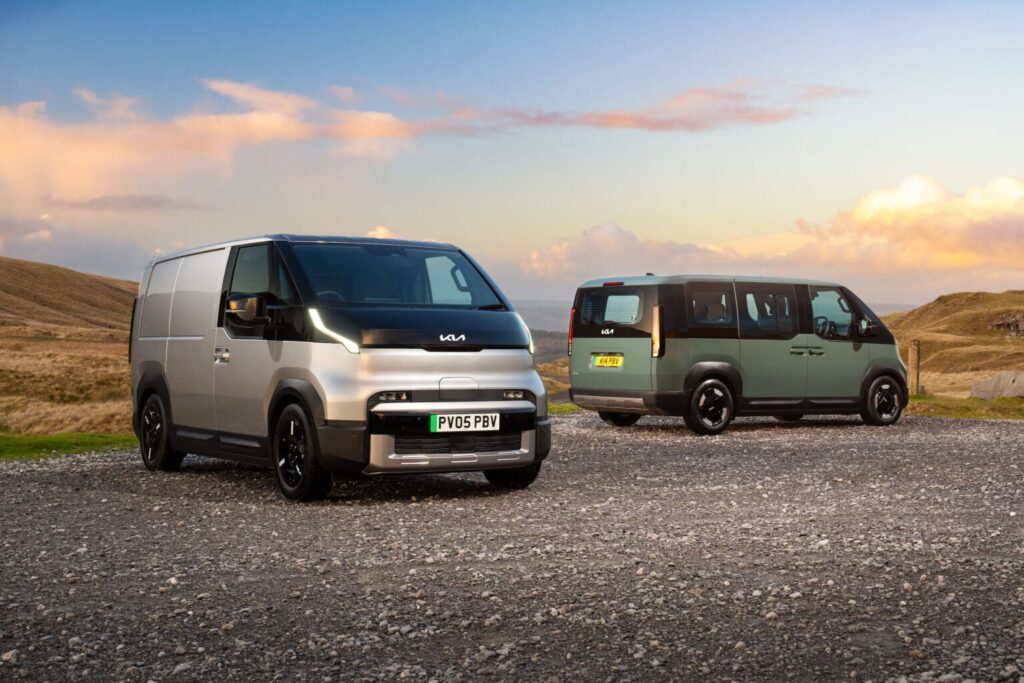
Kia PV5 Review : Kia has officially stepped into the electric commercial vehicle space with the PV5, marking the brand’s first serious move into vans under its Platform Beyond Vehicle (PBV) strategy. Positioned between compact and mid-size electric vans, the PV5 aims to deliver strong value while taking on established rivals such as the Volkswagen ID Buzz, Ford E-Transit range, and Stellantis-based electric vans. The big question is whether this newcomer can truly compete—and on many fronts, it delivers convincingly.
What Is the Kia PV5?
The PV5 is Kia’s first modular electric van, available in Cargo and Passenger versions. It sits in a unique size category—larger than compact electric vans but slightly smaller than full mid-size offerings. This positioning could appeal to businesses and families looking for a practical middle ground without the bulk or high cost of larger vans.
Exterior Design: Purposeful and Future-Focused
Unlike converted diesel vans, the Kia PV5 is designed from the ground up as an EV. Its short, smooth front end, centrally mounted charging port, and distinctive LED lighting give it a bold and modern identity. A black visor below the windscreen and squared wheel arches enhance its futuristic look, while the side and rear maintain the clean, functional proportions expected of a commercial vehicle.
Interior and Technology: Built for Work, Not Show
Step inside and the PV5 makes its priorities clear. The cabin is practical rather than flashy, with durable materials and a layout clearly designed around daily usability.
Storage is a standout feature, with large door pockets, multiple cupholders, a dash-top storage box, under-dash trays, and a deep centre console. Kia has clearly listened to commercial users.
The dashboard is dominated by a 12.9-inch touchscreen, paired with a 7-inch digital driver display. While most controls are touchscreen-based—which can be slightly fiddly—the system runs on Android Automotive, allowing fleet and business-focused apps to be integrated.
Passenger versions benefit from generous rear legroom, seating for five adults, and a massive 1,330-litre boot, making it equally suitable as a family or shuttle vehicle.
Cargo Space and Practicality
Currently, the PV5 Cargo is offered in L2/H1 form, measuring 4.67 metres in length and 1.9 metres in height. It provides:
- 4.4 cubic metres of cargo space
- Payload capacity between 665kg and 790kg, depending on variant
While it doesn’t match the Ford E-Transit Custom for sheer volume, it outperforms the VW ID Buzz Cargo in both cargo capacity and payload.
Practical touches include 180-degree rear doors, sliding side doors (with a second optional slider), modular bumpers for lower repair costs, and Kia’s AddGear system for customizable storage and accessory mounting.
Battery, Performance and Charging
The Kia PV5 electric van review wouldn’t be complete without a look at its powertrain options. Both Cargo and Passenger versions are offered with two battery choices:
- 51.5kWh battery
- Range: ~184 miles
- Power: 120bhp
- 71.2kWh battery
- Range: up to 258 miles
- Power: 160bhp
All variants support 150kW DC fast charging, enabling a 10–80% charge in under 30 minutes. On the road, the more powerful version feels responsive and well-balanced, with adjustable regenerative braking and stable handling thanks to the low-mounted battery pack.
Pricing and Value Proposition
One of the strongest arguments in favour of the PV5 is pricing. Kia has undercut most rivals significantly:
- PV5 Cargo starts at £27,645 (excl. VAT)
- With grants applied, real-world pricing is far lower than competitors
- PV5 Passenger starts from just over £31,000, even after incentives
When compared to the ID Buzz, which can cost tens of thousands more, the value gap is impossible to ignore.
Even base models come generously equipped with LED lighting, adaptive cruise control, parking sensors, reversing camera, wireless smartphone connectivity and advanced driver assistance systems.
Final Verdict
The Kia PV5 may not be the most stylish or powerful electric van on sale, but it excels where it matters most—value, practicality and efficiency. It’s cheaper than most rivals, well-equipped, thoughtfully designed and supported by Kia’s proven EV expertise.
For businesses seeking a cost-effective electric van or families needing a spacious electric people-mover, the PV5 makes a compelling case. As a first attempt at a commercial EV, Kia has delivered something genuinely impressive.
ALSO READ : Alfa Romeo Stelvio 2027 Imagined in Festive Red Ahead of Its Big Transformation


